Error Casting in Aluminum Casting – Common Defects & Prevention (ASUZAC ACM Guide)
“Error casting” (or casting defects) refers to any imperfection or irregularity that occurs during the aluminum casting process, resulting in parts that do not meet dimensional, surface, structural or aesthetic requirements.
Even with modern equipment and experienced operators, aluminum casting defects remain one of the biggest challenges in foundry production — especially when producing high-precision architectural components, decorative elements, furniture parts or structural castings that must withstand long-term outdoor exposure.
Understanding the most common error casting types, their root causes and how leading manufacturers prevent them is essential for buyers, designers and engineers who specify cast aluminum products.
ASUZAC ACM — Japan’s leading aluminum casting manufacturer — has developed rigorous defect identification, prevention and quality control systems to minimize casting errors and deliver consistently premium parts.
This comprehensive guide explains the most frequent aluminum casting defects observed across the industry, why they occur, and how ASUZAC ACM’s proprietary V-Process technology and strict inspection protocols keep defect rates extremely low.
Table of Contents
ASUZAC ACM – Japan’s Leading Aluminum Casting Manufacturer
ASUZAC ACM is a 100% Japanese-owned company under the ASUZAC Group (founded 1946). Since 2005 the company has operated its advanced production facility in Vietnam, combining Japanese engineering standards with efficient large-scale manufacturing.
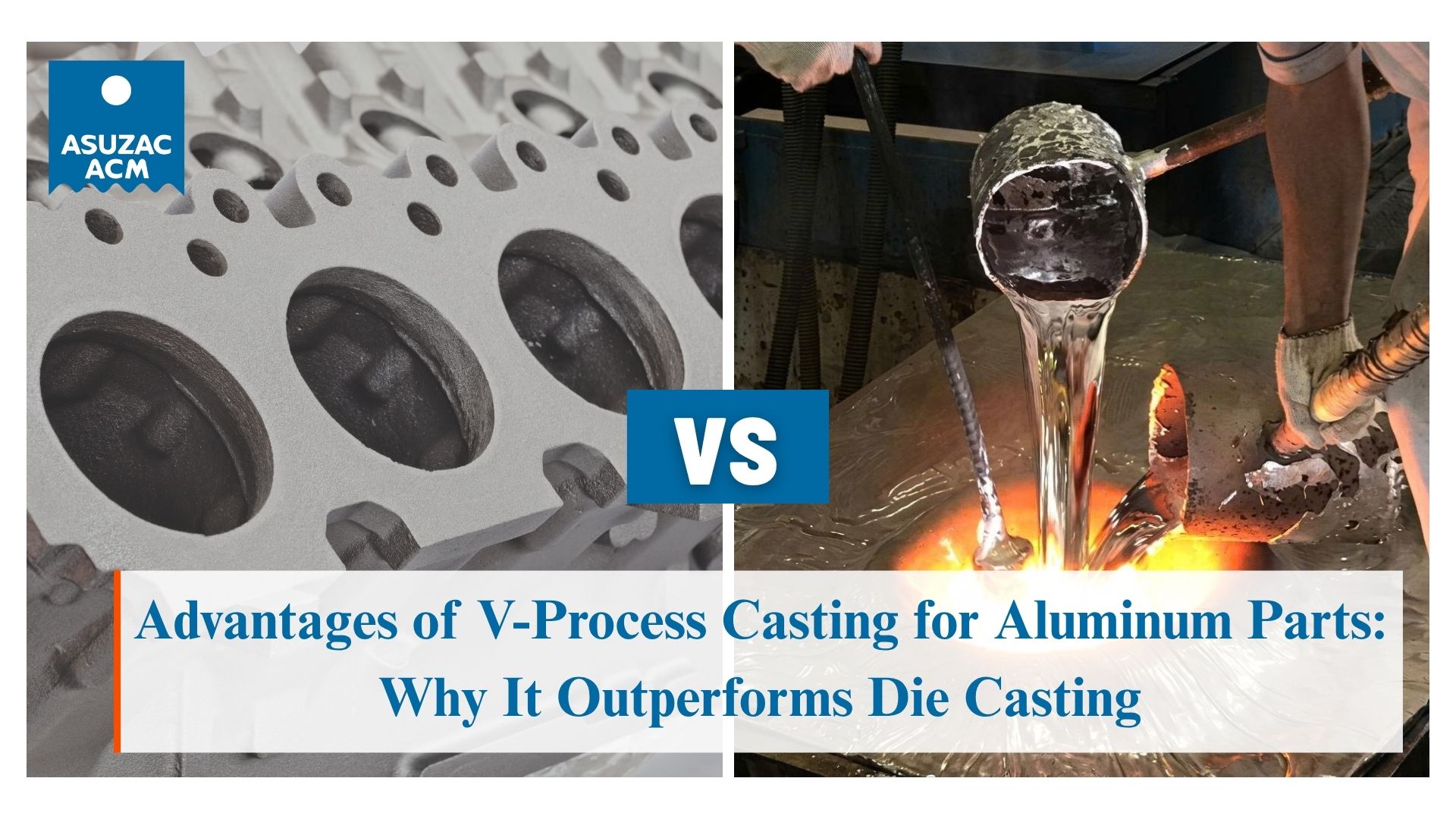
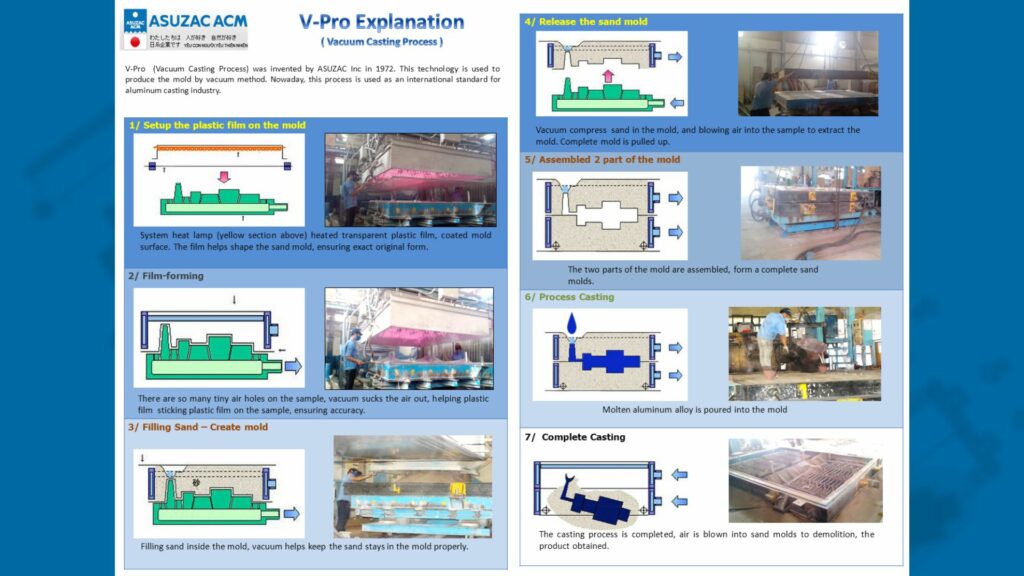
The company is best known for its proprietary V-Process Technology — a vacuum-assisted precision casting method developed in Japan in 1972 — that produces cast aluminum parts with:
- mirror-smooth surface finish (Ra < 0.4 μm achievable)
- zero internal porosity
- exceptional dimensional accuracy (±0.2 mm tolerance possible)
- ability to create large, intricate, one-piece forms
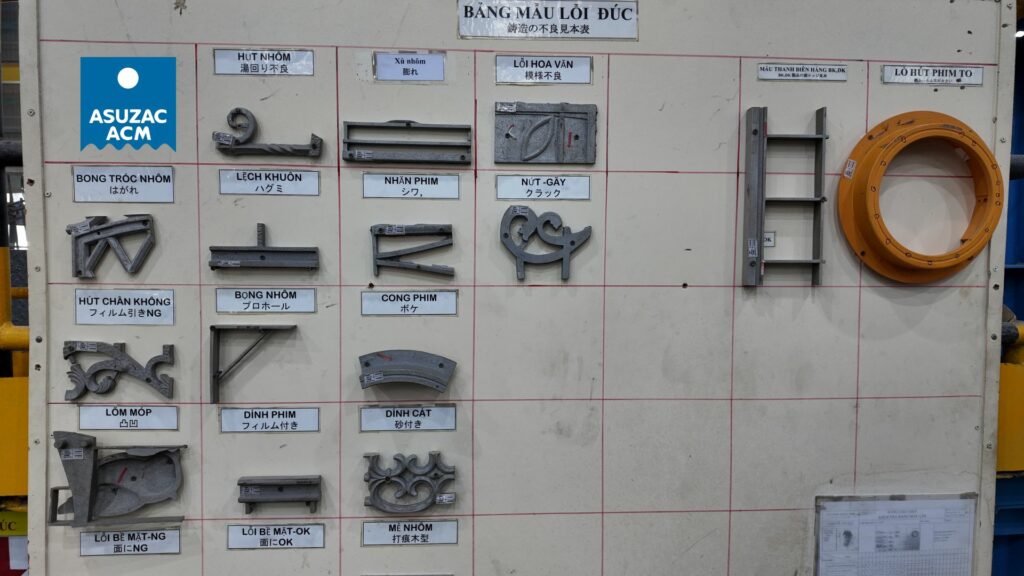
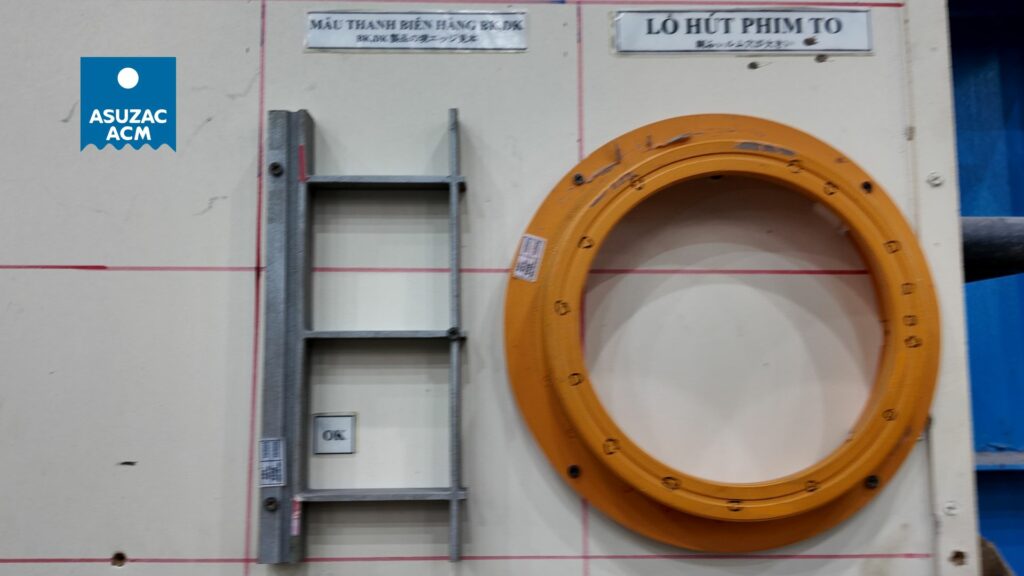
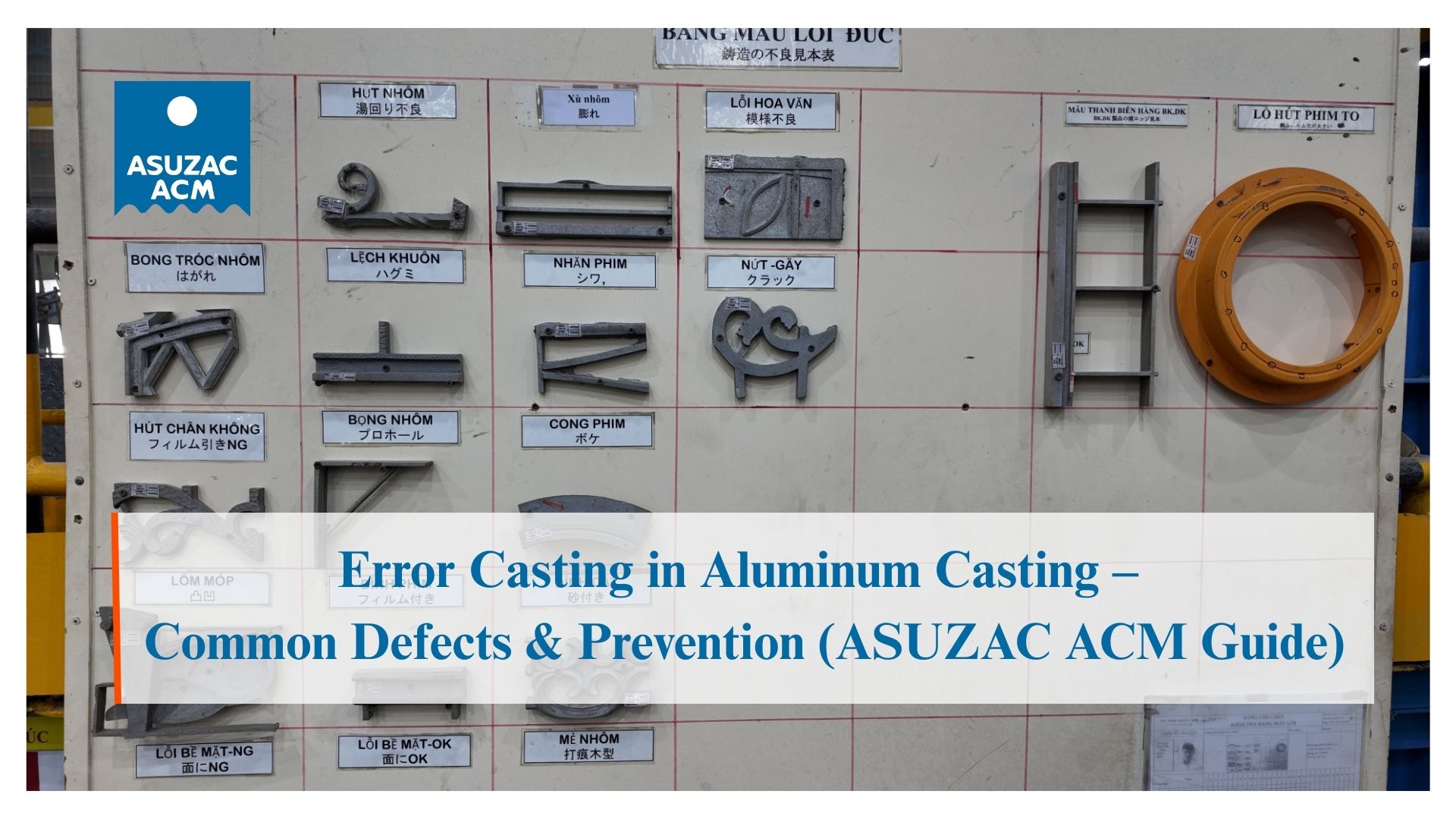
All products undergo multi-stage visual, dimensional and functional inspection using ASUZAC ACM’s detailed aluminum defects classification table — which clearly defines acceptable vs. rejectable conditions for every defect type.
This rigorous approach ensures that only the highest-quality castings reach customers — whether they are architectural facade panels, decorative trims, furniture components or structural elements.
Most Common Aluminum Casting Defects (Error Casting) & How ASUZAC ACM Prevents Them
Below is a detailed overview of the most frequently encountered casting defects, their typical causes, visual characteristics, and how ASUZAC ACM minimizes or eliminates them.
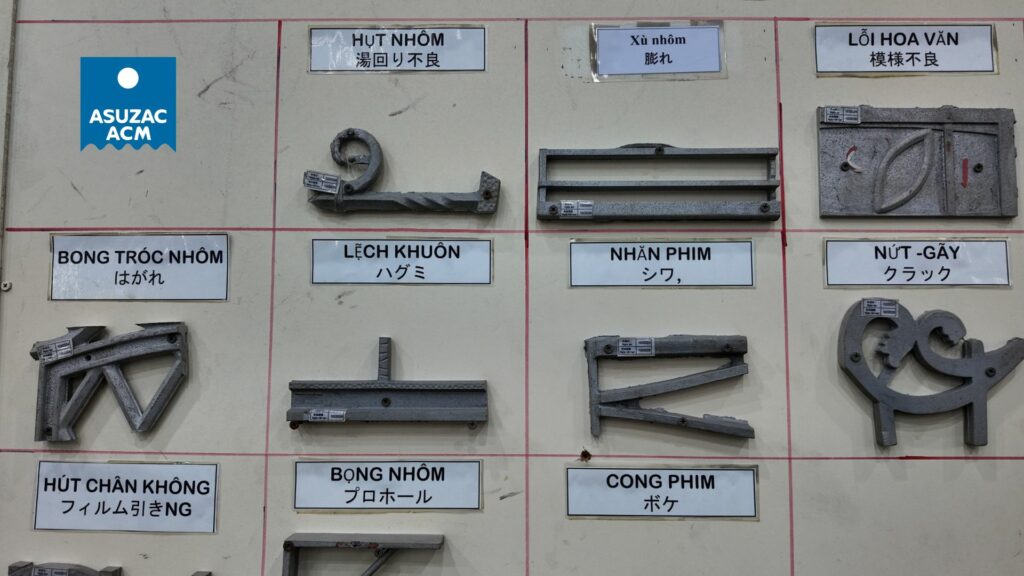
1. Aluminum Suction Defect / Vacuum Suction Defect
- Appearance: Irregular, crater-like depressions or “sucked-in” areas on the surface, usually with sharp edges.
- Cause: Insufficient vacuum pressure, air entrapment during mold filling, or improper gating/risering.
- Impact: Cosmetic failure + potential stress concentration points.
- ASUZAC ACM prevention: Optimized vacuum level control + precise gating design in V-Process → almost completely eliminated.
2. Aluminum Splinter Defect
- Appearance: Thin, sharp, needle-like metal protrusions or “splinters” on edges or surfaces.
- Cause: Metal penetration into mold cracks or excessive mold release agent.
- Impact: Safety hazard + poor aesthetics.
- ASUZAC ACM prevention: Strict mold preparation + controlled release agent application.
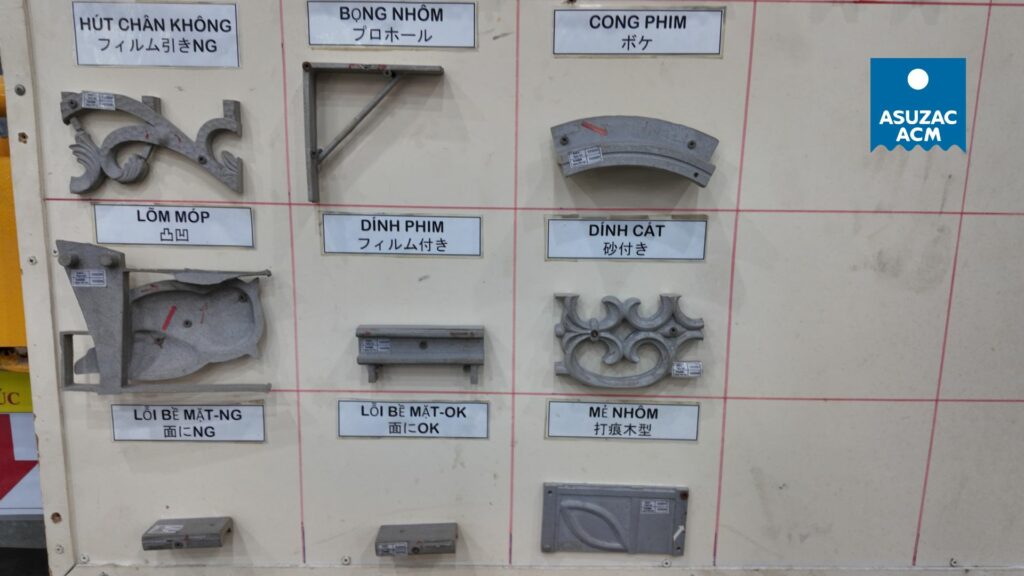
3. Pattern Defect / Film Wrinkling Defect / Film Bending Defect / Film Sticking Defect
- Appearance: Wrinkled, bent, folded or stuck film patterns transferred from the plastic film used in V-Process.
- Cause: Improper film heating, tension, vacuum timing or mold temperature.
- Impact: Surface irregularity that affects coating adhesion.
- ASUZAC ACM prevention: Precise film heating & tension control + real-time monitoring → very rare occurrence.
4. Aluminum Peeling Defect
- Appearance: Flaking or peeling of thin metal layers from the surface.
- Cause: Improper mold coating, excessive mold temperature, or metal turbulence.
- Impact: Cosmetic failure + potential corrosion initiation.
- ASUZAC ACM prevention: Advanced mold coating formulation + controlled pouring parameters.
5. Mold Misalignment Defect / Dented Edge Defect
- Appearance: Offset parting lines, mismatched features or dented edges.
- Cause: Mold wear, improper clamping or thermal expansion mismatch.
- Impact: Dimensional inaccuracy + assembly issues.
- ASUZAC ACM prevention: High-precision mold alignment system + regular mold maintenance.
6. Cracking Defect
- Appearance: Linear or branching cracks on the surface or internally.
- Cause: Thermal stress, rapid cooling, or alloy shrinkage.
- Impact: Structural weakness.
- ASUZAC ACM prevention: Controlled cooling rates + alloy optimization.
7. Aluminum Void Defect
- Appearance: Spherical or irregular cavities inside or on the surface.
- Cause: Gas entrapment or shrinkage during solidification.
- Impact: Reduced strength + cosmetic failure.
- ASUZAC ACM prevention: Vacuum degassing + optimized risering → voids virtually eliminated.
8. Sand Sticking Defect
- Appearance: Sand grains embedded in the casting surface.
- Cause: Mold coating failure or excessive mold temperature.
- Impact: Poor surface finish.
- ASUZAC ACM prevention: Advanced coating + temperature control.
9. Aluminum Chipping Defect / Surface Defect – NG
- Appearance: Small chips, pits or rough patches on edges or surfaces.
- Cause: Handling damage, mold erosion or ejection issues.
- Impact: Cosmetic failure.
- ASUZAC ACM prevention: Automated handling + strict post-cast inspection.
10. Surface Defect – OK vs NG Classification
ASUZAC ACM uses a clear Surface Defect Classification Table during final inspection:
- OK: Minor acceptable imperfections that do not affect function or appearance after coating
- NG: Defects that would compromise aesthetics, coating adhesion or structural integrity
Every part is individually assessed against this table — ensuring only perfect castings ship to customers.
Why ASUZAC ACM Minimizes Casting Errors Better Than Most
- V-Process technology inherently reduces gas porosity, mold penetration and surface defects compared to conventional sand or die casting
- Strict Japanese quality standards + multi-stage inspection
- Advanced mold design & maintenance
- Real-time process monitoring (temperature, vacuum level, pouring speed)
- Dedicated defect classification & traceability system
This results in extremely low scrap rates and consistently high-quality castings — whether for architectural facades, decorative accessories, furniture components or structural parts.
Contact ASUZAC ACM – Your Trusted Aluminum Casting Partner
Ready to discuss your next aluminum casting project and avoid common error casting pitfalls?
- Phone: +84-937-076-608
- Email: [email protected]
- Website: Contact Us
- Address: No. 1A, Road No. 8, Vietnam – Singapore Industrial Park, Binh Hoa Ward, Ho Chi Minh City
Casting Quality You Can Rely On
In 2026, the difference between an average casting supplier and an exceptional one is not just price — it’s defect prevention, surface quality, consistency and long-term reliability.
ASUZAC ACM — with its proven V-Process technology, rigorous defect classification and premium PPG coatings — delivers cast aluminum parts that meet the highest standards for architectural, decorative and structural applications.