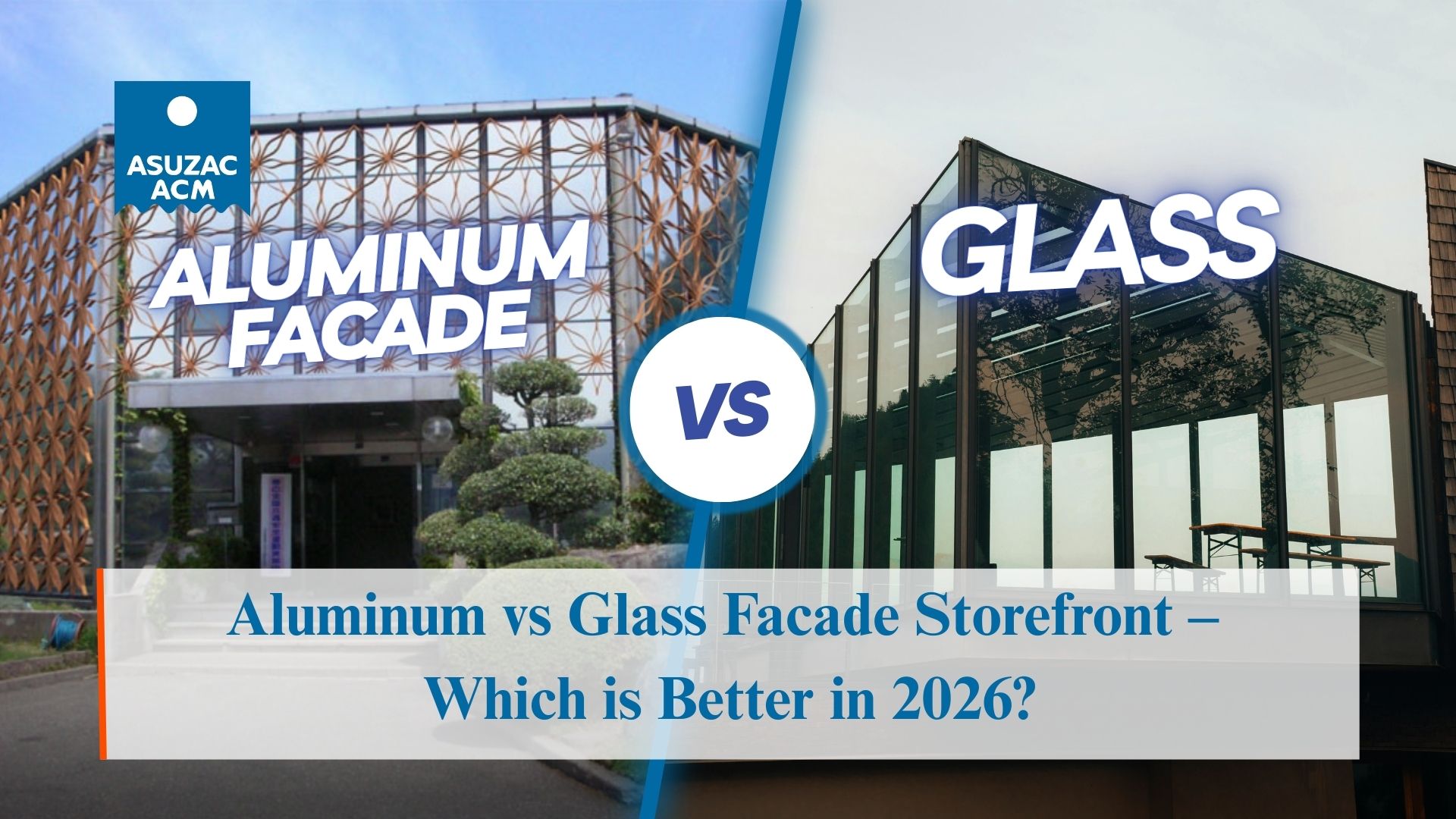
Aluminum vs Glass Facade Storefront – Which is Better in 2026?
Choosing between an aluminum facade and a glass facade storefront is one of the most important decisions architects, developers and building owners make when designing commercial, retail, mixed-use, institutional or transportation buildings.
Both systems are extremely popular — but they serve very different priorities.
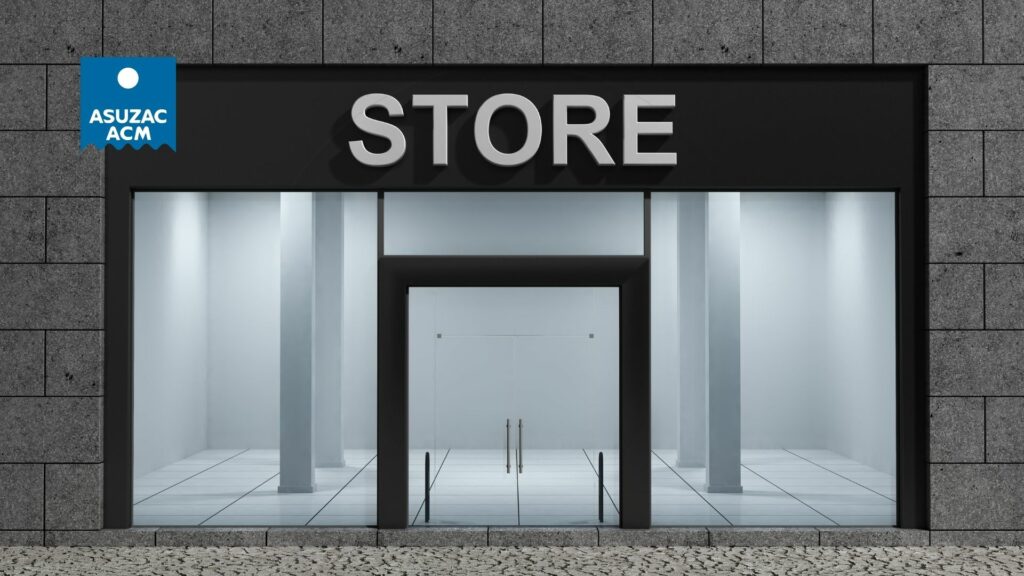
Glass facade storefront excels at maximum transparency, daylighting, modern “floating” aesthetics and a premium “see-through” retail/residential appeal.
Aluminum facade (especially cast aluminum panels) wins when the project needs deep design freedom, long-term durability in harsh weather, significantly lower maintenance costs and better lifecycle economics.
In 2026 — with stricter energy codes, rising labor costs, more extreme weather events and stronger focus on total cost of ownership — the comparison has become even more nuanced.
This article gives a detailed, side-by-side comparison of aluminum vs glass facade storefront, with special attention to real-world performance in demanding climates, maintenance realities and long-term cost.
Table of Contents
Quick Comparison Table: Aluminum vs Glass Facade Storefront (2026 Perspective)
Criterion
Cast Aluminum Facade Panels (ASUZAC ACM)
Glass Facade Storefront
Winner (Typical Projects)
Design flexibility & 3D expression
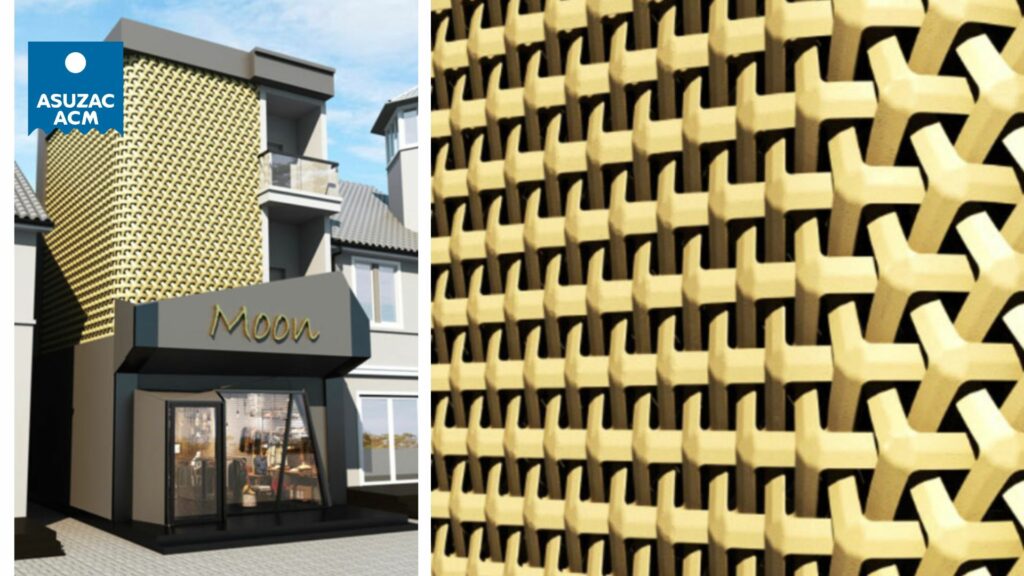
Deep relief, parametric textures, cultural motifs, seamless large formats
Mostly flat or lightly fritted surfaces
Cast Aluminum
Maximum transparency / views
Moderate (perforated or open patterns possible)
Highest possible (full floor-to-ceiling glass)
Glass
Durability in harsh weather
Exceptional (freeze-thaw, salt spray, UV, pollution)
Good but vulnerable to thermal shock & breakage
Cast Aluminum
Impact / wind-borne debris resistance
Very high (solid metal)
Moderate (laminated glass required)
Cast Aluminum
Maintenance & cleaning frequency
Very low (hose-off, no etching or seal failure)
High (glass etching, seal failure, interior dust)
Cast Aluminum
Lifecycle cost (30–50 years)
Significantly lower (almost no recoating/repair)
Higher (glass replacement, seal maintenance)
Cast Aluminum
Thermal performance (U-value / SHGC)
Excellent with insulated back-panels
Good but requires low-E coatings & argon fill
Tie (depends on design)
Fire performance
Non-combustible A1/A2
Non-combustible but framing can be weak point
Cast Aluminum
Weight on structure
Moderate
Heavy (especially triple glazing)
Cast Aluminum
Sustainability / circularity
100% recyclable aluminum + low-VOC coatings
Glass recycling lower, framing varies
Cast Aluminum
Spotlight: ASUZAC ACM – Japan’s Leading Cast Aluminum Facade Manufacturer
ASUZAC ACM is widely regarded as Japan’s foremost specialist in precision-cast architectural aluminum components and facade systems.
A 100% Japanese-owned company under the ASUZAC Group (founded 1946), ASUZAC ACM has operated its advanced Vietnam factory since 2005. The company’s signatureV-Process Technology — a vacuum-assisted casting method — produces panels with:
mirror-smooth surfaces
zero porosity
exceptional dimensional accuracy (±0.2 mm tolerance achievable)
ability to create large monolithic panels and complex 3D reliefs
All facade products are finished with AAMA 2605-compliant premium PPG coatings (DURANAR® liquid 70% PVDF or Coraflon® Platinum FEVE powder), ensuring:
color change ≤5 ΔE
chalk rating ≤8
film integrity after 10 years of intense South Florida-equivalent exposure
This combination makes ASUZAC ACM cast aluminum facade panels exceptionally suitable for harsh weather conditions worldwide — delivering long-term durability that dramatically reduces maintenance costs and lifecycle expenses for architectural projects.
Key Advantages of Cast Aluminum Facade Panels (ASUZAC ACM) vs Glass Storefront
1. Durability & Weather Resistance in Harsh Conditions
Cast aluminum panels from ASUZAC ACM excel in environments with:
extreme temperature swings & freeze-thaw cycles
heavy snow load & ice accumulation
intense UV exposure & heat
coastal salt spray & high humidity
urban pollution & acid rain
The PPG AAMA 2605 coatings + marine-grade aluminum alloy provide corrosion resistance far superior to most glass framing systems — especially around seals, gaskets and structural silicone joints that frequently fail on glass facades.
Once a building is constructed, facade maintenance becomes one of the most expensive and logistically challenging items.
Glass storefronts often require:
regular cleaning of exterior & interior surfaces
inspection & replacement of failed seals/gaskets
replacement of broken or thermally shocked glass units
costly scaffolding or swing-stage access
Cast aluminum panels from ASUZAC ACM require almost none of this:
Hose off occasionally → no etching, no seal failure
No glass breakage risk
No interior dust accumulation on spandrels
No thermal shock issues
The result: significantly lower OPEX over 30–50 years — making cast aluminum facade a far more cost-efficient choice for owners who want long-term value without constant upkeep.
3. Design Freedom & Aesthetic Impact
While glass storefronts offer unmatched transparency, cast aluminum panels from ASUZAC ACM provide unmatched design freedom:
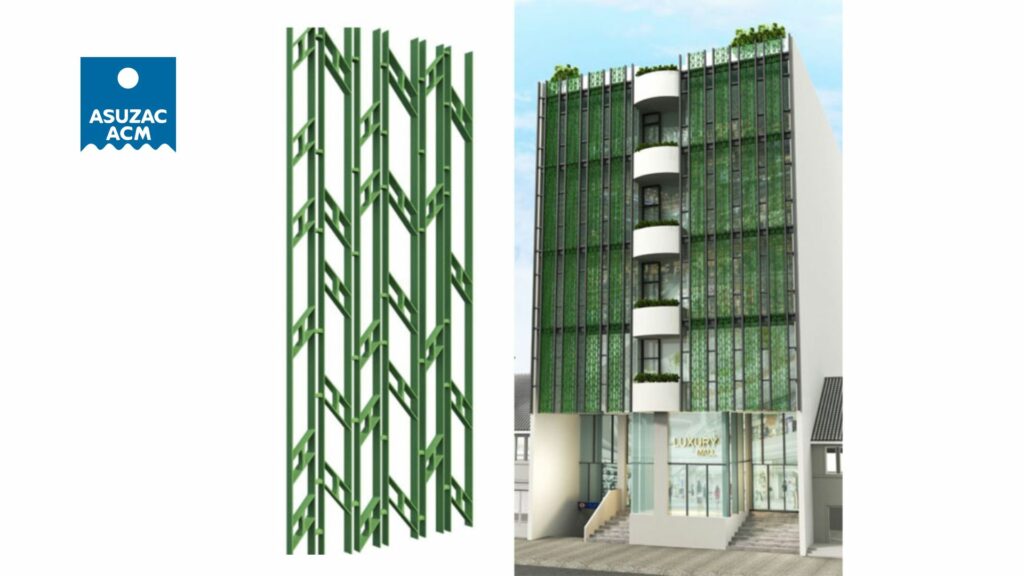
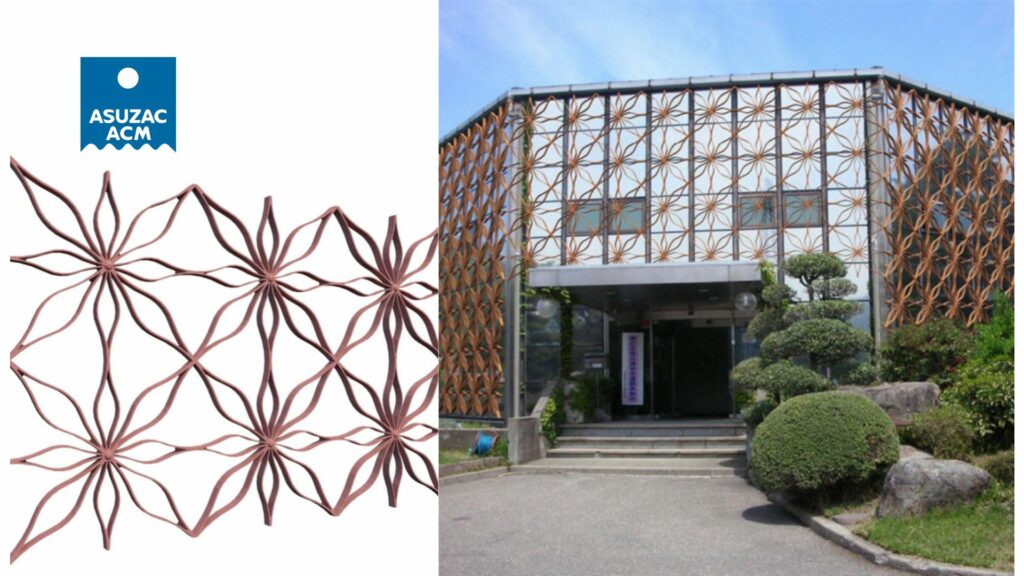
deepest 3D relief (up to 60 mm) for parametric, organic or cultural patterns
ability to integrate ventilation, acoustic control and solar shading in the pattern itself
This makes cast aluminum ideal for projects where the facade must tell a story, create visual rhythm or become a landmark feature.
4. Real-World Performance Examples
ASUZAC ACM cast aluminum facade panels have been proven on landmark projects worldwide, including:
Ho Chi Minh City Metro Line 1 – Ben Thanh Market Station (opened 2024, fully operational 2026) Large monolithic cast aluminum panels (W1469 × H4860 × D60 mm) surround the cooling tower. The complex circular breathable pattern combines ventilation, privacy and landmark aesthetics — withstanding high humidity, pollution and UV exposure.
Kogakuin University of Technology & Engineering – Hachioji Campus (Tokyo, Japan) Over 15,000 m² of custom cast aluminum exterior wall panels with seamless wave-textured design — creating a dynamic, breathing facade while meeting strict seismic and durability standards.
Showa Women’s University (Tokyo, Japan) Custom cast aluminum facade elements featuring intricate patterns that blend tradition with contemporary design — delivering visual impact and long-term durability.
Hibiya Arcade (Tokyo, Japan) Cast aluminum facade accents and decorative panels enhance the arcade’s elegant, high-end atmosphere — providing both aesthetic refinement and structural reliability in a busy urban setting.
These projects illustrate how ASUZAC ACM cast aluminum panels consistently perform in real-world demanding conditions while maintaining beauty and minimizing maintenance.
Contact ASUZAC ACM – Your Trusted Aluminum Facade Partner
Ready to explore cast aluminum panels facade for your next project?
Address: No. 1A, Road No. 8, Vietnam – Singapore Industrial Park, Binh Hoa Ward, Ho Chi Minh City
Choose a Facade That Pays You Back for Decades
In 2026, the smartest facade decision is not just about initial appearance — it’s about total cost of ownership, weather resilience, minimal disruption and lasting value.
ASUZAC ACM cast aluminum panels facade — proven on projects such as Ho Chi Minh City Metro Line 1, Kogakuin University, Showa Women’s University and Hibiya Arcade — give architects and owners a system that is stunning today and cost-efficient for generations.